

King's Pawn Opening
- Biyi Akinpelu

- Feb 28
- 2 min read
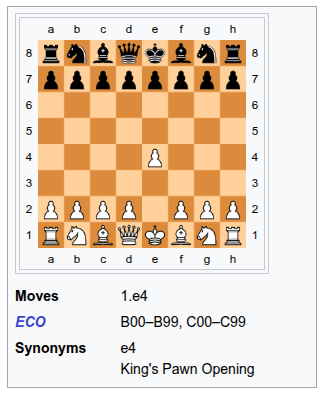
The King’s Pawn Opening — beginning with 1.e4 — is one of the most traditional and respected ways to start a chess game.
It is as old as the game itself in modern European chess, heralded by masters such as Bobby Fischer, Garry Kasparov, and countless others who valued classical principles of central control, rapid development, and strategic clarity.
Playing 1.e4 is not merely a move; it is a statement of intent — you are claiming the centre, freeing your queen and bishop, and inviting open, tactical play.
The essence of 1.e4 is simple yet profound.
By advancing the king’s pawn two squares, you immediately stake a claim on the centre, particularly the crucial d5 and f5 squares, while opening lines for your bishop on f1 and queen on d1. This allows a fluid and harmonious development of your pieces, a principle that has been lauded throughout chess history.
A fundamental tip for beginners and intermediate players is to pair your King’s Pawn Opening with rapid minor piece development. Typically, after 1.e4 e5, the next moves should focus on developing knights to f3 and c3, then the bishops to c4 or b5 (in the case of the Italian Game or the Ruy López), followed by early castling to secure the king. Each move should aim to control key central squares and prepare for safe rook activation.
One common mistake many players make is moving the same piece repeatedly in the opening, or pushing pawns unnecessarily before developing minor pieces. In the King’s Pawn Opening, this can be disastrous — because time lost in the first five moves is often decisive. The opening’s strength lies in swift development, central control, and king safety, not in speculative pawn pushes or premature attacks. Remember, the goal is to establish a harmonious position where your pieces are coordinated and ready to respond to your opponent’s threats.
Another key point is the importance of understanding typical pawn structures arising from 1.e4. Whether facing 1...e5 (open games) or 1...c5 (Sicilian Defence), the nature of the centre dramatically affects the middlegame plans. Against 1...e5, open lines favor tactical play and early piece exchanges; against 1...c5, you must be prepared for asymmetrical structures that reward strategic patience and careful maneuvering. Recognizing the pawn skeleton of the position allows you to anticipate threats, plan attacks, and safeguard weaknesses.
Lastly, the King’s Pawn Opening encourages initiative. As White, you set the tone; your opponent is reacting. Every move should reinforce your control of the centre, protect your king, and gradually improve your pieces’ activity. Avoid unnecessary complications early on — patience and disciplined piece development often yield a decisive advantage in the middlegame.
In essence, 1.e4 is timeless. It embodies classical chess philosophy: seize the centre, develop efficiently, safeguard your king, and create opportunities for tactical and strategic play. Mastery of the King’s Pawn Opening is a gateway to understanding open games and cultivating a balanced approach that merges calculation with foresight, tradition with creativity.
Reference

Comments